Reishi mushrooms are the first feature of our adaptogen series. More to come on mushrooms and more to come on adaptogens. Enjoy!
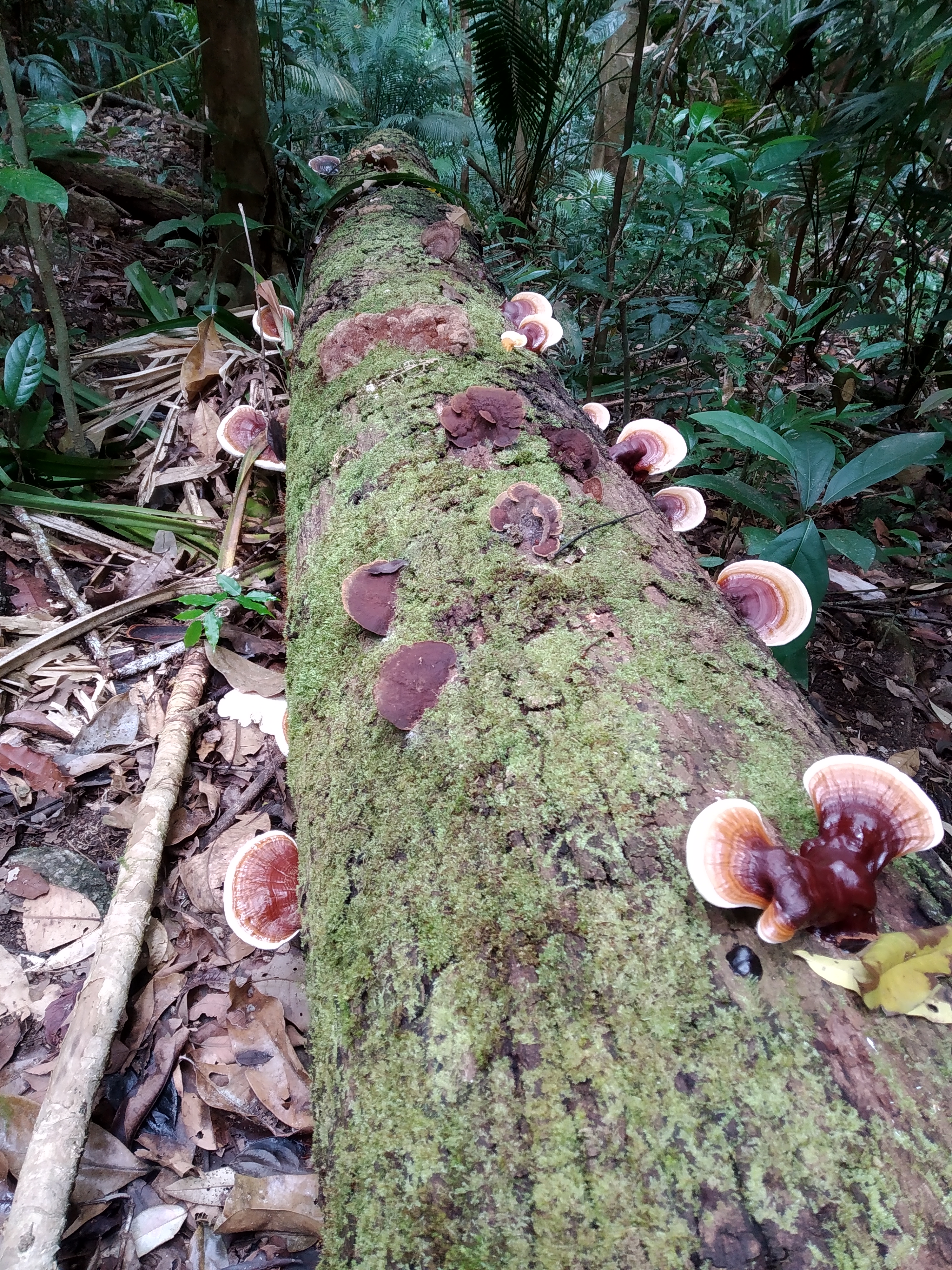
Two weeks ago, Alondra and I were enjoying a holiday up in the Daintree Rainforest in far-north Queensland. We saw lots of reishi mushrooms growing along fallen trees among the trail sides all over the forest floor- they were beautiful.
I recall reading once that reishi mushrooms grow on all continents on deciduous trees and are often found fruiting in abundance. Regardless, I was surprised to see them in the Queensland rainforest.
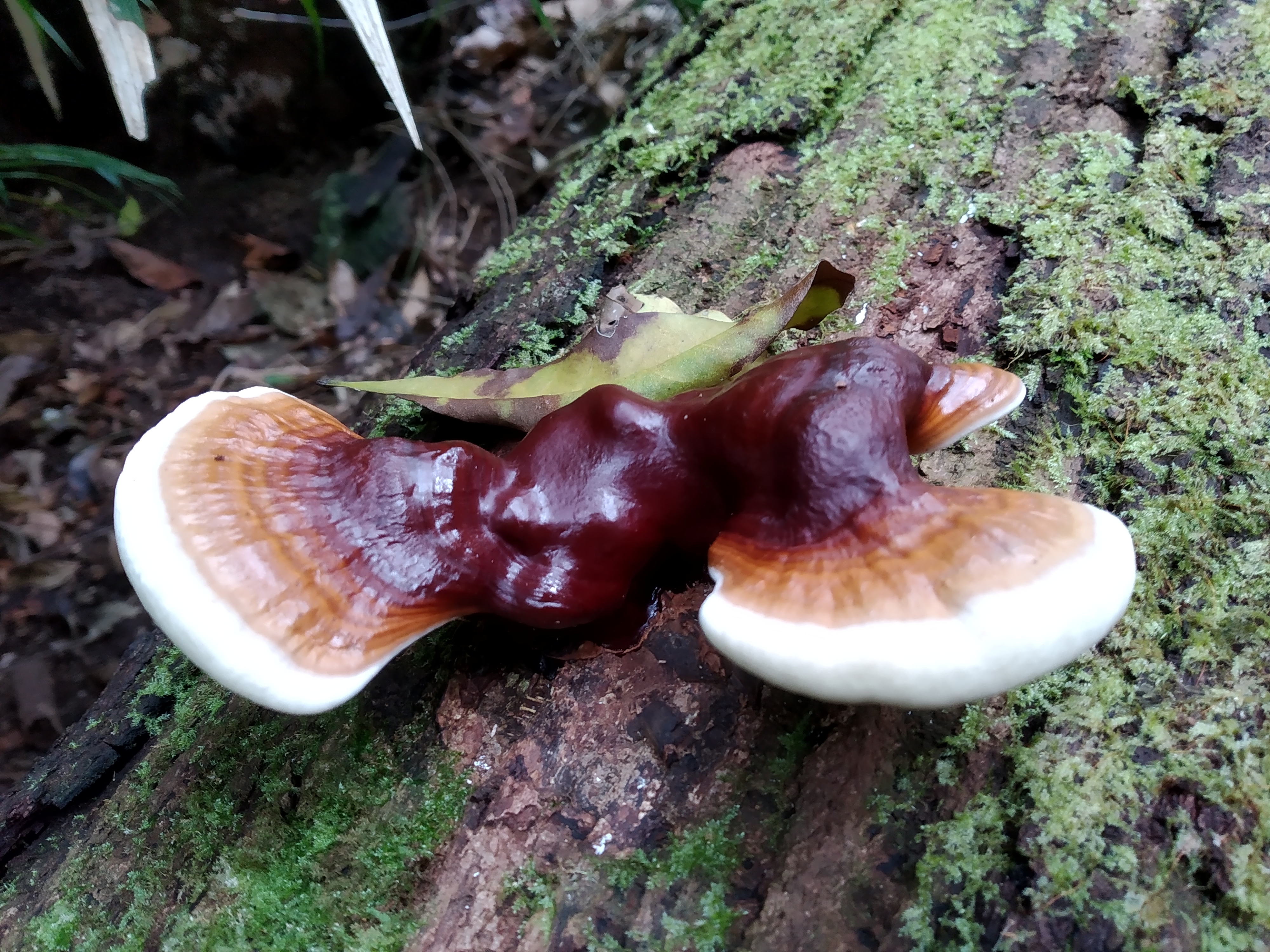
Reishi - the most widely researched medicinal mushroom
We have enjoyed using Reishi mushrooms in evening teas for a number of years now and the recent getaway prompted me to write an article covering their significant health properties. The Reishi mushroom (Ganoderma lucidum) is the most widely researched medicinal mushroom and rightfully so, considering the breadth of its health applications. This article focuses on their adaptogenic properties related to stress and anti-aging.
Known in Chinese as Lingzhi which means Herb of Spiritual Potency, the reishi mushroom is revered in Asian culture for its myriads of medicinal qualities. Even the Chinese goddess Kuan Yin is sometimes represented holding this special mushroom. The reishi as a symbol often depicts success, divine power, health and longevity.
Reishi mushrooms have been documented in Chinese medicine as early as the 6th century AD for their diverse therapeutic properties.
Researched performed by Wachel-Galor et al. shows that reishi mushrooms have been formally documented in Chinese medicine as early as 502-536 AD in the Supplement to Classic of Materia Medica.
Centuries later in 1590 AD during the Ming Dynasty, the first Chinese definitive pharmacopeia called Ben Cao Gang Mu by Li Shin-Zhen, reishi mushrooms are ascribed the therapeutic properties of tonification, building Qi and vital energy, strengthening heart function, memory and anti-aging.1
The medicinal properties of reishi are due to their unique polysaccharide, peptidoglycan and triterpene content including ganoderic and lucidenic acids. There are more than 120 bioactives and 50 different types of polysaccharides and peptidoglycan complexes found in reishi mushrooms.2
Interestingly, reishi mushrooms have pharmaceutical value, but little value as a food. The fruiting body, spores and mycelia are all commonly utilized in its preparations for teas, powders and extracts. As a side note, mushrooms contain all essential amino acids and have a particular abundance of lycine and leucine. So the next time the topic of plant based protein sources comes up…
Reishi Mushrooms are Adaptogens
What is an adaptogen?
Adaptogens are agents that increase an organism’s non-specific resistance to stress through its ability to adapt. This applies to the different stages of stress as defined by Hans Selye: alarm, resistance and exhaustion. Adaptogenic substances are often wide acting and as Panossian (2017) explains, their effects range from protection against chronic inflammation, atherosclerosis, neurodegenerative processes, cognitive impairment, metabolic disorders, cancer, stress induced fatigue and other aging related diseases.3
Commonly known adaptogens other than reishi include ginseng, ashwagandha, schisandra, tulsi, eleutherococcus, rhodiola, cordyceps, and codonopsis.
Adaptogens like Reishi support multiple body systems
Adaptogens contain significant antioxidants, protect cell membrane and DNA integrity, energy production, brain function and hormone support. Reishi mushrooms are among the true adaptogens that support adrenal function and act upon the HPA or hypothalamic-pituitary-axis.4 The multi system effects seen in adaptogens like reishi make them an appropriate choice for issues regarding cognitive and immune function, vitality and anti-aging.
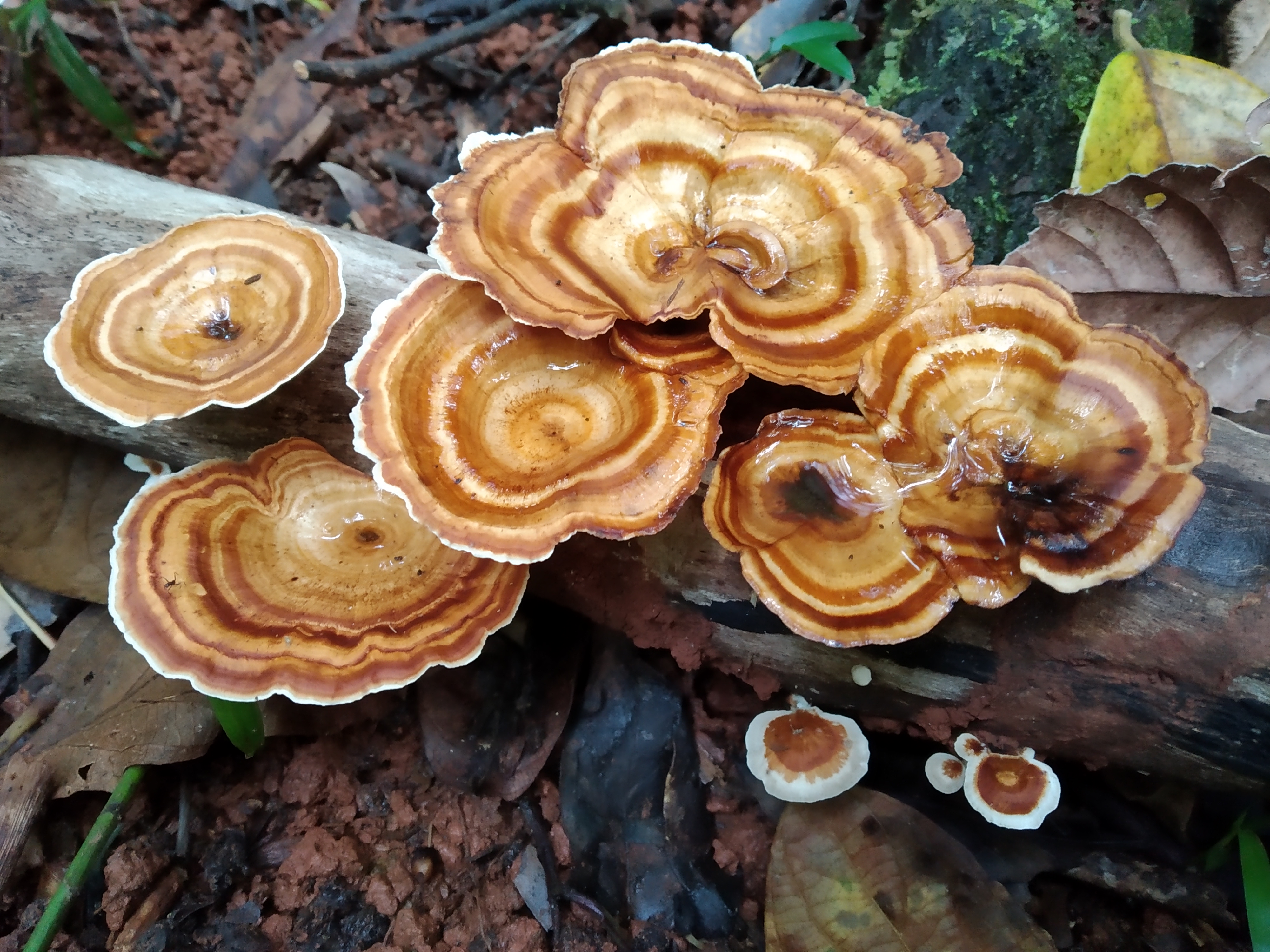
Reishi fruiting bodies young and old in the Daintree rainforest.
Key health properties of Reishi mushrooms
Reishi and Antioxidant and Anti-aging Activity
The bioactives in reishi, specifically polysaccharides and peptidoglycans, demonstrate DNA protective effects, free radical scavenging and chelating abilities. Interestingly, these bioactives mimic our endogenous antioxidant superoxide dismutase (SOD) by expressing protection of cellular DNA from harmful agents including UV exposure, hydrogen peroxide and chemotherapy.5-8
On a cellular level the polysaccharides and peptidoglycans protect DNA from oxidation preserve cellular life, reduce telomere overuse, reduce cellular cancer potential and premature death. This preserves cellular health and vitality, a basic principle of anti-aging. Cellular integrity and vitality infer a paralleled state of health for both the body and brain.
Reishi and Anti-Depression and Anti-Anxiety Effects
Happiness and vitality are inextricably connected. The lack of both accelerates aging both cognitively and physically. In Traditional Chinese Medicine, reishi mushrooms are often prescribed for conditions including depression and anxiety. A 20139 and 201610 study substantiated their anti-depression and anti-anxiety effects. The studies attributed their findings to adrenal support and Qi building (vitality-life force) qualities.
Reishi and Anti-Cancer and Anti-Metastasis
The beta glucans present in reishi mushrooms stimulate the human immune system to better recognize and tag cancer cells, while at the same time recruit B, T and Natural Killer cells to attack the cancer and reduce metastasis. These interactions have been observed with both in vivo and in vitro studies.23
The reishi mushroom anti-cancer effects have been observed specifically in breast cancer,11,12 lung13 and liver cancers,14,15 bladder cancer,16 ovarian cancer,18 colorectal cancer,19,20 leukemias, lymphomas and multiple myeloma.17,21,22
An addition to their anti-cancer properties, reishis have unique protective effects on patients undergoing chemo and radiotherapies.23
They enhance immune function and protect against white and red blood cell depletion that occurs as “collateral damage” during chemotherapy. Of course, years of research is required to further explore these findings and develop appropriate clinical tools.

Reishi and Liver Protective properties
In addition to supporting the adrenal system, the adaptogenic properties of reishi mushrooms have protective effects on the liver. The liver is our internal apothecary, pharmacy, dispensary and incendiary. The liver is critical to all body functions and when it diminishes all functions suffer.
In a number of studies on rats with induced liver damage, reishi extracts showed statistically significant reduction in “damage indicator enzyme levels” including AST, ALT, and alkaline phosphatase (ALP). The studies involved various forms of chemically induced damage,24-26 as well as hepatitis B.27 Another study demonstrated that reishi improved liver morphology and histological (tissue) composition in biliary obstruction liver cirrhosis.28
Putting It All Together
DNA protection, stress reduction, anti-aging, liver protection, anti-depression, immune strengthening and anti-cancer effects are among the health properties exhibited by reishi mushrooms- the Chinese Herb of Spiritual Potency for longevity. That is a solid checklist and good reason you should drink reishi tea at home.
How to use Reishi mushrooms at home
Reishi in coffee or a Reishi tea...
Reishi is easy to include in your morning coffee if you are coffee person. At home we generally prepare Reishi tea by itself, not in mixtures with other things. I like to use a 30-40% plus polysaccharide level extract, 1/2 teaspoon per mug for making a tea. A whole reishi powder is also beneficial if in place of an extract powder.
If using a whole reishi mushroom fruiting body, you can break off a piece, boil it for up to 20 minutes and then drink the tea. Continue to use the same piece of mushroom until it stops giving color when re-boiled. Enjoy!
Disclaimer. The information represented in this article is meant to provide concepts from evidence based research. It is not intended to treat or diagnose any health condition. For appropriate treatment methods please contact your healthcare provider.
- Wachtel-Galor S, Yuen J, Buswell JA, et al. Ganoderma lucidum (Lingzhi or Reishi): A Medicinal Mushroom. In: Benzie IFF, Wachtel-Galor S, editors. Herbal Medicine: Biomolecular and Clinical Aspects. 2nd edition. Boca Raton (FL): CRC Press/Taylor & Francis; 2011. Chapter 9.
- El Enshasy HA, Hatti-Kaul R. Mushroom immunomodulators: unique molecules with unlimited applications. Trends Biotechnol.2013 Dec;31(12):668-77.
- Panossian A. Understanding adaptogenic activity: specificity of the pharmacological action of adaptogens and other phytochemicals. Ann N Y Acad Sci. 2017 Aug;1401(1):49-64
- Lian-ying L et al. A preliminary review of studies on adaptogens: comparison of their bioactivity in TCM with that of ginseng-like herbs used worldwide. Chin Med. 2018; 13: 57. Published online 2018 Nov 16. doi: 10.1186/s13020-018-0214-9
- Ooi VE, Liu F. Immunomodulation and anti-cancer activity of polysaccharide-protein complexes. Curr Med Chem. 2000 Jul;7(7):715-29.
- Lee JM et al. Inhibition of lipid peroxidation and oxidative DNA damage by Ganoderma lucidum. Phytother Res. 2001 May;15(3):245-9.
- 6. Shi YL et al. Mushroom-derived preparations in the prevention of H2O2-induced oxidative damage to cellular DNA. Teratog Carcinog Mutagen. 2002;22(2):103-11.
- Mau JL et al. Antioxidant properties of several medicinal mushrooms. J Agric Food Chem. 2002 Oct 9;50(21):6072-7.
- Matsuzaki H et al. Antidepressant-like effects of a water-soluble extract from the culture medium of Ganoderma lucidum mycelia in rats. BMC Complement Altern Med. 2013 Dec 26;13:370.
- Singh R, et al. Evaluation of Antianxiety Potential of Four Ganoderma (Agaricomycetes) Species from India in Mice. Int J Med Mushrooms.2016;18(11):991-998.
- Suarez-Arroyo IJ et al. Anti-tumor effects of Ganoderma lucidum (reishi) in inflammatory breast cancer in in vivo and in vitro models. PLoS One. 2013;8(2):e57431.
- Jiang J et al.Ganoderma lucidum suppresses growth of breast cancer cells through the inhibition of Akt/NF-kappaB signaling. Nutr Cancer.2004;49(2):209-16.
- Kashimoto N et al.Inhibitory effect of a water-soluble extract from the culture medium of Ganoderma lucidum (Rei-shi) mycelia on the development of pulmonary adenocarcinoma induced by N-nitrosobis (2-hydroxypropyl) amine in Wistar rats. Oncol Rep.2006 Dec;16(6):1181-7.
- Weng CJ et al.Inhibitory effects of ganoderma lucidum on tumorigenesis and metastasis of human hepatoma cells in cells and animal models. J Agric Food Chem.2009 Jun 10;57(11):5049-57.
- Aimei Li et al.Ganoderma lucidum polysaccharide extract inhibits hepatocellular carcinoma growth by downregulating regulatory T cells accumulation and function by inducing microRNA-125b. J Transl Med. 2015; 13: 100.
- Lu QY et al.Ganoderma lucidum extracts inhibit growth and induce actin polymerization in bladder cancer cells in vitro. Cancer Lett.2004 Dec 8;216(1):9-20.
- Müller CI et al.Ganoderma lucidum causes apoptosis in leukemia, lymphoma and multiple myeloma cells. Leuk2006 Jul;30(7):841-8.
- Hsieh TC,Wu JM.Suppression of proliferation and oxidative stress by extracts of Ganoderma lucidum in the ovarian cancer cell line OVCAR-3. Int J Mol Med. 2011 Dec;28(6):1065-9.
- Liu J et al.Anti-androgen effects of extracts and compounds from Ganoderma lucidum. Chem Biodivers.2009 Feb;6(2):231-43.
- Dan X et al.A Ribonuclease Isolated from Wild Ganoderma Lucidum Suppressed Autophagy and Triggered Apoptosis in Colorectal Cancer Cells. Front Pharmacol.2016 Jul 25;7:217.
- Chang YH et al.Ganoderma lucidum extracts inhibited leukemia WEHI-3 cells in BALB/c mice and promoted an immune response in vivo. Biosci Biotechnol Biochem.2009 Dec;73(12):2589-94.
- Calviño E et al.Ganoderma lucidum induced apoptosis in NB4 human leukemia cells: involvement of Akt and Erk. J Ethnopharmacol.2010 Mar 2;128(1):71-8
- Guggenheim AG et al.Immune Modulation From Five Major Mushrooms: Application to Integrative Oncology. Integr Med (Encinitas). 2014 Feb;13(1):32-44.
- Lin J. M, Lin C. C, Chen M. F, Ujiie T, Takada A. Radical scavenger and antihepatotoxic activity of Ganoderma formosanum, Ganodermalucidum and Ganoderma neo-japonicum. J Ethnopharmacol. 1995;47:33–41.
- Shi Y, Sun J, He H, Guo H, Zhang S. Hepatoprotective effects of Ganoderma lucidum peptides against D-galactosamine-induced liver injury in mice. J Ethnopharmacol. 2008;117:415–19.
- Lakshmi B, Ajith T. A, Jose N, Janardhanan K. K. Antimutagenic activity of methanolic extract of Ganoderma lucidum and its effect on hepatic damage caused by benzo[a]pyrene. J Ethnopharmacol. 2006;107(2):297–303.
- Li Y. Q, Wang S. F. Anti-hepatitis B activities of ganoderic acid from Ganoderma lucidum. Biotechnol Lett. 2006;28(11):837–41.
- Park E. J, Ko G, Kim J, Dong H. S. Antifibrotic effects of a polysaccharide extracted from Ganoderma lucidum, Glycyrrhizin, and Pentoxifylline in rats with cirrhosis induced by biliary obstruction. Biol Pharm Bull. 1997;20:417–20.
