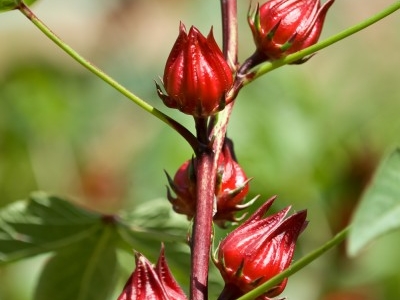
Hibiscus sabdariffa, commonly known as Roselle was first cultivated in Angola and is now grown throughout North Africa, Asia and Mexico. Called “Sour Tea” it is commonly used a refreshing drink with a zinger taste similar to cranberry juice. Hibiscus is a recommended daily consumable in our Empowered Brain Program because of its overall health benefits which I will outline shortly.
Hibiscus has played a role in traditional Asian and African medicines for generations for a variety of health conditions such as hypertension, upper respiratory issues, body temperature regulation, fluid balance, digestion, blood cleansing, metabolism and more. Its potent restorative health effects are in part due to its extremely high Vitamin C and anthocyanin (ANTH) antioxidant content.1
In this article I present several remarkable hibiscus health properties described in the research, together with two ways we consume hibiscus at home.
Likewise, I recently discovered the delicious hibiscus drink sobolo, common in Ghana. If you make sobolo please send me an email with your recipe.
Health Properties of Hibiscus
Hibiscus Lowers Cholesterol In Patients With Diabetes
In a 2009 study, 60 patients with diabetes tested their blood levels of lipids, lipoproteins, and apoproteins. The participants consumed two glasses of hibiscus tea daily for 1 month and then retested their blood lipid and cholesterol levels. Results- there was a significant decrease in total cholesterol, low density lipoproteins (LDLs), triglycerides and Apo-B100, with an increase in high density lipoproteins (HDLs).2
Folk medicine often makes associations between the colors and shapes of a fruit or herb with certain health applications. Two common examples include papaya and breast milk production and figs with male reproductive function. The deep red color of the hibiscus calyces / flowers as well as the blood like color of their tea follows case in point.
Hibiscus Lowers Blood Pressure In Patients With Diabetes
A similar study performed in 2008 tested the effects of 2 cups of hibiscus tea daily for one month on diabetic patients with hypertension. The mean systolic blood pressure decreased from 134.4+/-11.8 mm Hg at the beginning of the study to 112.7+/-5.7 mm Hg after 1 month. Mean pulse pressure decreased from 52.2+/-12.2 to 34.5+/-9.3 mm. There was no significant effect on diastolic blood pressure.3
Hibiscus Reduces Metabolic Syndrome
Metabolic Syndrome (MeSy) is the term given to high blood insulin levels (insulin resistance), obesity, high blood pressure and high cholesterol. MeSy is considered the clinical stage prior to coronary heart disease and diabetes. In actuality, it is a very poor sign of health if an individual already has Metabolic Syndrome.
In one study, a daily dose of 100mg hibiscus sabdariffa extract powder was given to MeSy patients over the course of one month. Not only were there significant changes in blood pressure, cholesterol levels, but also reduced blood glucose levels and lowered markers for insulin resistance.4,5 Though hypertension, high cholesterol levels and insulin resistance seem to have difference causes, their degenerative effects on health coincide. For a single herb to effectively address (reduce) all three concurrently, without lifestyle modifications, is very promising.
Hibiscus' Potential to Reduce Harmful Effects of Ultraviolet Radiation
UV radiation exposure causes increases in oxidative stress, lipid peroxidation and protein oxidation. This damages cellular activity and the genetic integrity of cells to correctly replicate and function. In fewer words, the harmful effects of UV radiation result in cell mutation and premature cell death. Clinical administration of hibiscus demonstrated reversal of the aforementioned parameters; this may be due to its high concentrations of the antioxidant anthocyanin.6 While the focal point of the research article as reduction of cellular damage from UV radiation, an appropriate takeaway is preservation of healthy cellular function.
Hibiscus Reduces Obesity and non-Alcoholic Fatty Liver
A clinical trial performed in 2014 demonstrated that hibiscus sabdariffa extract leads to a reduction in obesity, abdominal fat, serum free fatty acids (FFAs) as well as improves liver health. This is perhaps due to the high polyphenol content in the red flowers.7 Polyphenols are micronutrients found in plant based foods that are best known for their antioxidant activity.
Hibiscus and Melanoma
A 2015 study demonstrated that hibiscus leaf polyphenolic extract has noteworthy properties inducing autophagic cell death in melanoma cells.8 A similar study in 2015 evaluated the potency of hibiscus anthocyanins for inducing apoptotic cell death in human Leukemia cells.9 In simple terms, it has properties that cause melanoma and leukemia cancer cells to self-destruct. Any natural substance that contributes to cancer cell apoptosis or self-destruction is worthy of further research and exploration. Considering the other health properties described above, regular hibiscus tea consumption is highly recommended.
Hibiscus Recipes
Hibiscus is one of our family’s favorite herbs to use as a tea- here are two ways to enjoy it.
Agua Jamaica
This refreshing drink is so simple to make. Just throw in a handful of hibiscus calyces (flowers) into boiled water and let it steep. As the temperature goes down place it in the fridge to cool. To give it variety and extra refreshment add fresh lemongrass and mint leaves.
Difficulty waking up in the morning? Trying to get off coffee or caffeine? Try drinking this cool first thing in the morning.
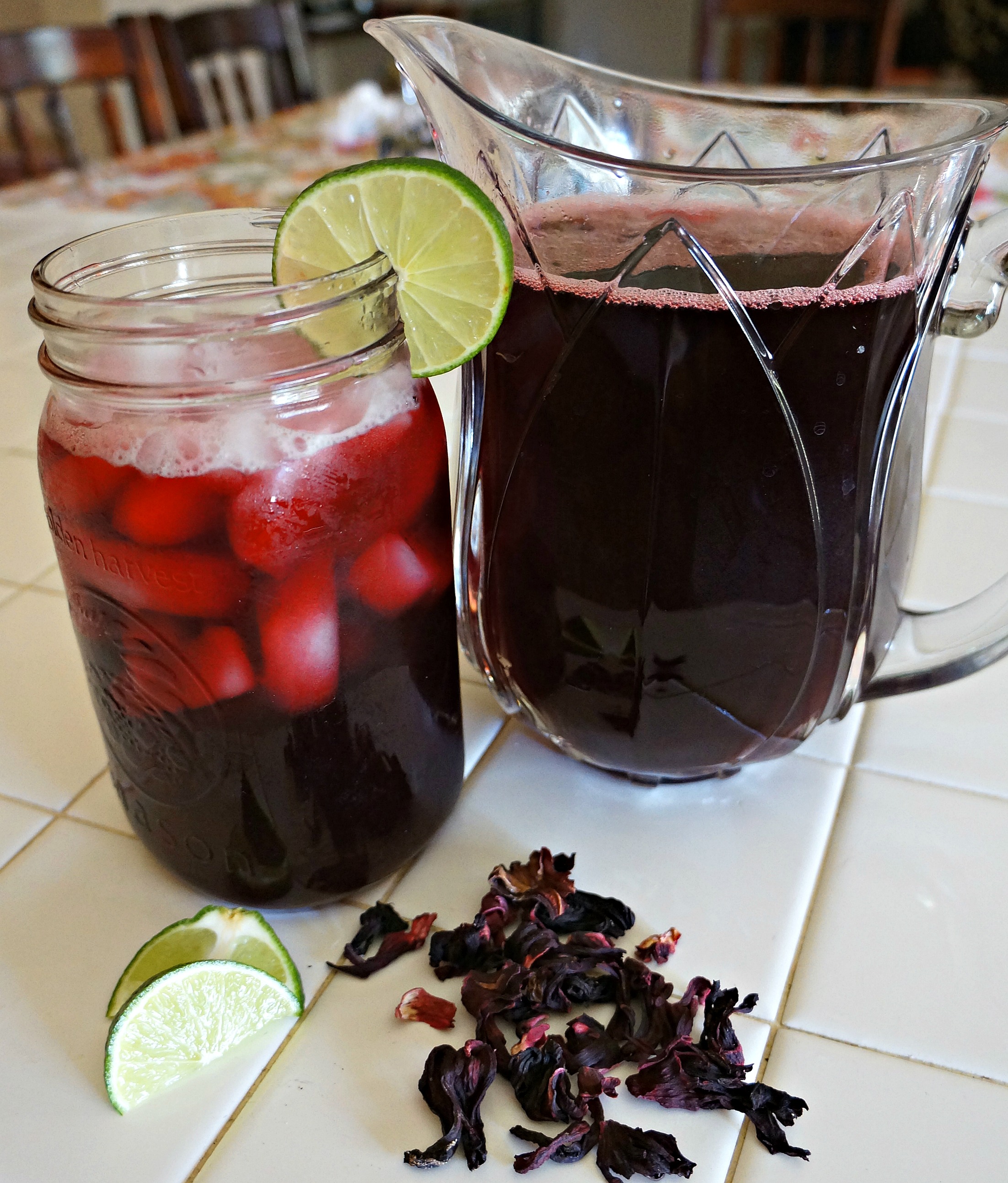
Dragon’s Blood Hibiscus Tea
- Handful of hibiscus flowers
- 1 tsp of dried ginger powder or several slices of fresh ginger
- 1 stick of cinnamon
- 1 tsp of dried licorice root powder
- 6 cloves
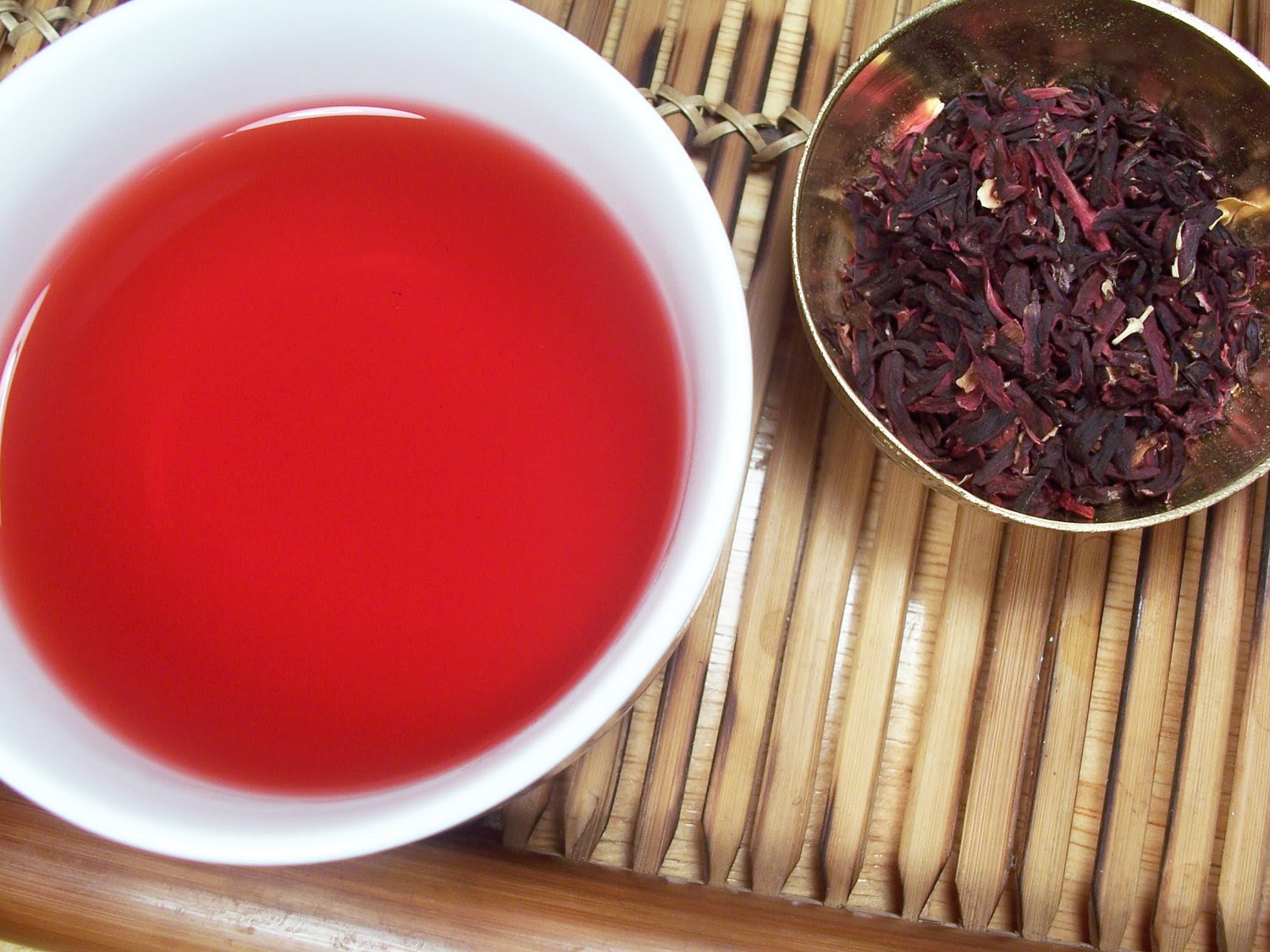
Boil a pot of water with several cloves, a cinnamon stick and the ginger. After several minutes remove the pot from the heat and add the licorice root powder and a handful of hibiscus calyces. Leave to steep for several minutes and then enjoy hot.
Hibiscus has so many beneficial qualities that it should be used on a daily basis. The dried flowers can be purchased at most local health food shops.
Disclaimer. The information represented in this article is meant to provide concepts from evidence based research. It is not intended to treat or diagnose any health condition. For appropriate treatment methods please contact your healthcare provider.
- Takayuki Sogo, Norihiko Terahara, Ayami Hisanaga, Takuma Kumamoto, Takaaki Yamashiro, Shusong Wu, Kozue Sakao, De-Xing Hou. Anti-inflammatory activity and molecular mechanism of delphinidin 3-sambubioside, a Hibiscus anthocyanin. Biofactors. 2015 Jan-Feb;41(1):58-65
- Hassan Mozaffari-Khosravi, Beman-Ali Jalali-Khanabadi, Mohammad Afkhami-Ardekani, Farhad Fatehi. Effects of sour tea (Hibiscus sabdariffa) on lipid profile and lipoproteins in patients with type II diabetes. J Altern Complement Med. 2009 Aug;15(8):899-903.
- H Mozaffari-Khosravi, B-A Jalali-Khanabadi, M Afkhami-Ardekani, F Fatehi, M Noori-Shadkam. The effects of sour tea (Hibiscus sabdariffa) on hypertension in patients with type II diabetes. J Hum Hypertens. 2008 Aug 7.
- C M Gurrola-Díaz, P M García-López, S Sánchez-Enríquez, R Troyo-Sanromán, I Andrade-González, J F Gómez-Leyva. Effects of Hibiscus sabdariffa extract powder and preventive treatment (diet) on the lipid profiles of patients with metabolic syndrome (MeSy). Am J Physiol Gastrointest Liver Physiol. 2008 Nov;295(5):G1092-103.
- T O Ajiboye, H O Raji, A O Adeleye, N S Adigun, O B Giwa, O B Ojewuyi, A T Oladiji. Hibiscus sabdariffa calyx palliates insulin resistance, hyperglycemia, dyslipidemia and oxidative rout in fructose-induced metabolic syndrome rats. J Sci Food Agric. 2015 May 12.
- Hatice Uce Ozkol, Ismail Koyuncu, Yasin Tuluce, Nihat Dilsiz, Sinan Soral, Halil Ozkol. Anthocyanin-rich extract from Hibiscus sabdariffa calyx counteracts UVC-caused impairments in rats. Pharm Biol. 2015 Mar 18:1-7.
- Hong-Chou Chang, Chiung-Huei Peng, Da-Ming Yeh, Erl-Shyh Kao, Chau-Jong Wang. Hibiscus sabdariffa extract inhibits obesity and fat accumulation, and improves liver steatosis in humans. Food Funct. 2014 Apr ;5(4):734-9. Epub 2014
- Chun-Tang Chiu, Shu-Wen Hsuan, Hui-Hsuan Lin, Cheng-Chin Hsu, Fen-Pi Chou, Jing-Hsien Chen. Hibiscus sabdariffa leaf polyphenolic extract induces human melanoma cell death, apoptosis, and autophagy. J Food Sci. 2015 Mar ;80(3):H649-58. Epub 2015 Feb 17.
- Hibiscus anthocyanins rich extract-induced apoptotic cell death in human promyelocytic leukemia cells. Toxicol Appl Pharmacol. 2005 Jun 15;205(3):201-12. Epub 2004 Dec 7
